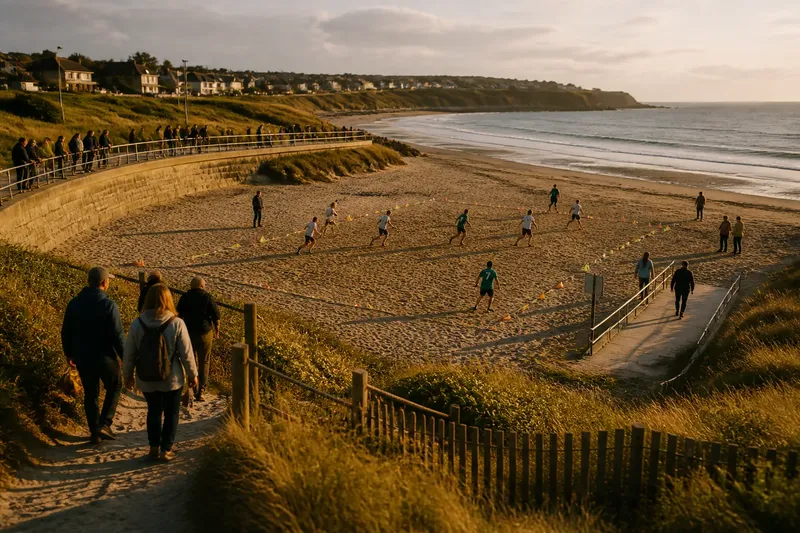
How a Fictional Beach Game Becomes a Local Meeting Place
Learn how a fictional beach game can become a local meeting place through a clear routine, considerate use of shared sand, and simple ways to take part.

A recurring beach game can turn a stretch of sand into a local meeting place without claiming the shore. In this fictional example, neighbors use a familiar afternoon, a soft ball, and a few clear customs to make their game easy to join and easy to leave.
What makes a beach game feel local?
A game feels local when people begin to associate it with a place and a familiar pattern. The players need not form a club or reserve a court. A recognizable routine can help passersby understand what is happening and how to approach.
The beach remains shared space. Walkers, swimmers, families, and people seeking a quiet place all have their own reasons to be there. The game should fit around those uses, not displace them. That means choosing an open area, keeping equipment portable, and moving when nearby activity calls for room.
How can an occasional game develop a routine?
Imagine that three neighbors in a seaside town start tossing a soft ball on a quiet weekday afternoon. They meet again when their schedules allow, but at first there is no pattern for others to recognize. They agree to return on a familiar afternoon when convenient, without treating that time as a reservation or a promise.
They also make a simple choice about the space: if the usual patch is busy, they look for another open spot or skip that occasion. They leave no equipment behind and expect no one else to move. Over time, a passerby who sees them more than once can understand that the game sometimes returns, while also seeing that the beach remains open to everyone.
Say the neighbors arrive one afternoon and find a family settling near their usual spot. They carry the ball farther along the sand, find an open area away from the family’s towels and the path to the water, and begin there. The observable result is that the family keeps its place while the game continues without obstructing others; if no suitable area is open, the neighbors skip the game instead.
How should players choose and share a spot?
Look for clear sand away from beach entrances, people entering the water, and groups already settled nearby. Keep the play compact rather than marking out a permanent rectangle. A soft ball is easier to carry and less disruptive than hard equipment, though players should still pause if it could reach other beach users.
Before each game, the group can check the setting and decide what to do:
- Check whether the intended area is already occupied; if it is, move to a clear area or skip the game, and if it is open, begin with room around nearby beach users.
- Check whether walkers need to cross the playing area; if they do, pause and let them pass, and if they do not, keep the route visibly clear as play continues.
- Check whether the ball could reach towels, children, or people near the water; if it could, shrink the play area or stop, and if it cannot, continue while watching for changes.
- Check whether the tide, wind, or beach activity has changed the available space; if it has, relocate or leave, and if conditions remain suitable, keep the game within the open area.
- Check whether anyone nearby appears to want space or quiet; if so, move farther away or pause, and if not, continue without assuming that watching means consent to join.
- Check whether the ball and personal belongings can all be carried away; if not, reduce what the group brings or end the session, and if they can, collect everything before leaving.
Which small customs help newcomers take part?
Customs make an informal game understandable without turning it into a private event. The neighbors in this invented gathering settle on a few habits:
- They bring a soft ball and take it with them when they leave.
- They pause when someone needs to cross the sand.
- They explain how turns work when a new player asks.
- They invite people to join without treating a spectator as a participant.
- They let anyone sit out or leave without explanation.
These habits answer practical questions: where to stand, when to ask, and whether joining is expected. They also keep the gathering flexible. Someone can play for a while, chat, watch, or pass by without needing a role in the group.
Can spectators belong without playing?
Yes. A person can watch from a respectful distance, greet the players, or stop for a short conversation. The players should not ask spectators to keep score or manage equipment unless they volunteer. Nor should the group let its audience block a path or take over a place where other beach users need to sit.
In the fictional example, a neighbor brings a folding chair and watches for a while. The players greet him, but leave him free to watch quietly. When another passerby asks when the game usually happens, they describe the customary afternoon and explain that weather and beach use may change the plan.
What do people ask about informal beach games?
Does a recurring beach game need a formal club?
No. Neighbors can meet informally with a portable ball and a shared understanding of how to take turns. A club is a separate option for people seeking organized competition or formal arrangements.
How can a newcomer ask to join?
Approach during a pause and ask whether there is room to play. The regulars can explain how turns work and make clear that watching or declining is also welcome.
What if the usual spot is occupied?
Choose another open area if one is suitable, wait until the space clears, or skip that occasion. The group should not treat a familiar patch of public beach as reserved.
Can someone watch without being invited to play?
Yes. A greeting is enough; players should not interpret attention as a request to join. Spectators can enjoy the game while keeping paths and other shared areas clear.
How does a beach game become a meeting place?
In this fictional walk-through, the neighbors start with a ball and a loose plan to return. They choose open sand, adapt when other people arrive, and make the basic customs easy to see. A passerby can recognize the game, ask about joining, or simply continue along the beach.
For a beach game to become a local meeting place, its routine must remain an invitation rather than a claim. The most useful custom is to check the space before play and again when conditions change; that keeps the game visible while leaving the shore available to everyone.