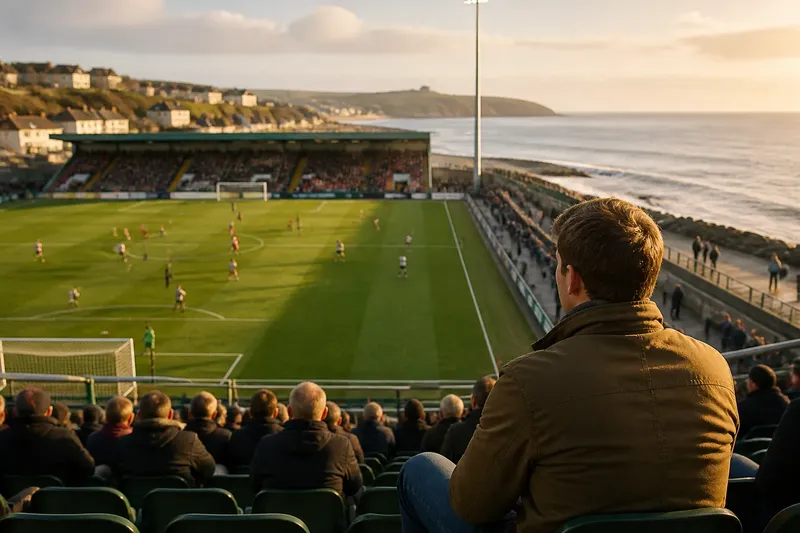
Why a Shoreline Changes the Shape of a Sporting Boundary
Learn how a shoreline shapes a sporting boundary by reading terrain, access and shared space before deciding where a coastal game begins and ends.
A coastal sporting boundary is often a decision made on the ground, not a line that can be copied from a standard field. To read a shoreline’s effect on a sporting boundary, start with the edges people already use: the waterline, a path, a dune fence, a seawall or the edge of a public lawn. Each can influence where play feels to begin and where spectators expect it to stop.
This matters even when a game has familiar rules. A ball that crosses a painted line has a clear status; a ball that reaches a public path or a shifting strip of beach may create a question about play, access and safety. Read the place in order, then make the boundary visible to players and visitors.
What counts as the edge of the playing place?
Begin by distinguishing the playing area from the broader coastal setting. The playing area is the space a game uses. The setting includes routes and surfaces that may remain open to everyone, such as a promenade, beach access ramp, public lawn or fishing path.
Walk the proposed perimeter rather than judging it from one viewpoint. Look for changes in surface and use: firm sand giving way to loose shingle, grass meeting a dune, or an open area narrowing beside a seawall. These transitions are easier to miss from a central viewing spot, yet they can affect whether a ball stays playable and whether a person can pass without entering the game.
Note which edges are fixed and which move. A fence, retaining wall or marked court edge is relatively stable. A wet-sand line, high-tide reach or temporary crowd line can change. A boundary that depends on a changing edge needs a clear local marker or a rule that does not rely on that edge staying put.
How should you read access paths and shared space?
Trace every route that reaches or crosses the proposed playing area. Include obvious entrances and less visible cut-throughs, such as a gap in a dune fence or a path from a nearby parking area. A route can be part of the matchday landscape without being part of the game.
Ask who needs the route and when. A narrow path may carry walkers, people using mobility aids, anglers with equipment or families heading to the beach. If play would block it, the layout needs another boundary or a different playing space. Do not assume that a quiet route is unused simply because no one is on it during a quick visit.
Check how spectators are likely to move. People tend to follow the clearest path toward the action, and an informal sideline can form across an access point. A rope or set of cones may help show where to stand, but it should not turn a public route into an obstacle. The useful distinction is between a place to watch and a route to pass through.
Where should the boundary meet an irregular coast?
Choose reference points a player can identify from the playing area. A painted line might work on a maintained court, while cones, flat markers or a visible change in the playing surface may suit an informal beach game. Avoid relying on a distant landmark that disappears behind spectators or looks different from opposite ends of the field.
Where the shoreline bends, do not force a straight edge through a natural pinch point just because a rectangular layout is familiar. A boundary can follow a more usable shape if the game’s rules allow it. The aim is a line that players can read and that leaves shared routes and sensitive ground outside active play.
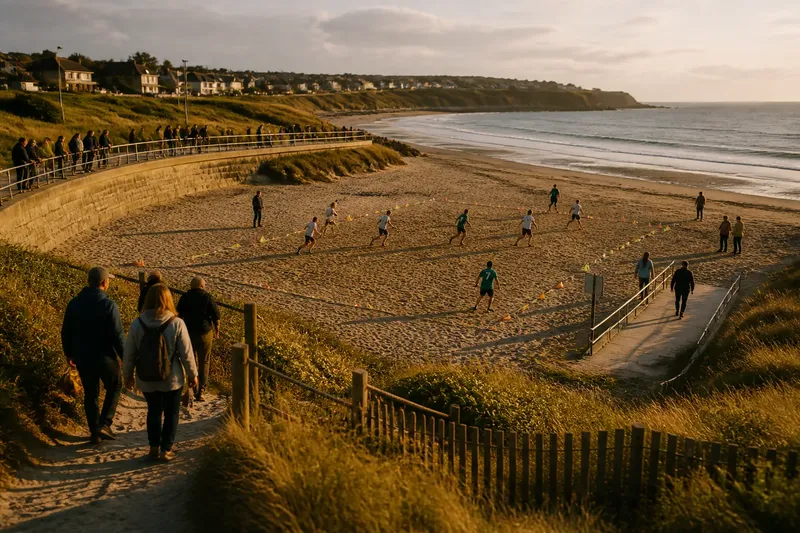
Imagine a community game planned beside a curved seawall, with a public ramp crossing the widest end of the open sand. The organizers could mark a compact playing area with cones set clear of the ramp, then use the wall’s visible end and a dune fence as reference points for the remaining edges. Players would have an understandable perimeter, while passersby would retain a clear route around it.
How can you explain the line before play?
Walk the perimeter with players and anyone responsible for organizing the event. Point out the in-bounds area, the out-of-bounds surface and any shared route that must stay open. If a line follows a curve, show where it turns rather than describing it only as “along the shore.”
Agree on what happens when the ball reaches an uncertain edge. The answer might be a stoppage, a restart from a visible marker or a rule that treats a particular surface as out of play. The right choice depends on the game and setting; where an official rule, site instruction or local requirement applies, follow that direction.
Use markers that contrast with their surroundings and do not create a trip hazard. Small, low-profile cones may be easier to see against sand than a dark cord; on grass, a bright marker may stand out better. Check the line from the players’ usual positions, not only from where the organizers stand.
What questions help settle a shoreline boundary?
Should the waterline define the boundary?
Only if the game can accommodate a line that shifts with tide and wave reach. Otherwise, choose a fixed reference such as a marker line set back from the wet edge, and tell players what counts as out.
Can a public path run through the playing area?
A route that remains open should be treated as shared space, not as an invisible part of the field. Keep play and spectators clear of it, or choose a different layout that lets people pass without crossing active play.
What if spectators gather along the boundary?
Leave enough room for the game’s movement and for people to pass behind the watching area. Use a visible spectator edge, and ask an organizer to redirect the crowd if it narrows a public route.
How often should the boundary be checked?
Recheck it when the setting changes, such as after a tide shift, a change in access or a new event setup. A quick walk before play can reveal that a marker has moved or a route has become busy.
What should you check just before play?
Make one last walk around the marked area. Confirm that players can see the corners and turns, that the chosen edge still matches the agreed rule, and that no marker has drifted into a path. Look outward as well as inward: a boundary can be clear to the players and still leave spectators or passersby confused.
For a coastal sporting boundary, the most useful line is not necessarily the neatest one. It is the line that fits the ground, can be recognized during play and respects the space people use beyond the game. Read the shoreline again whenever its shape or access changes, and adjust the markers before those changes become disputed calls.